
Corporate training
Healthcare
Clinical care is already good. The hospitality around it is what a patient remembers.
Why it matters
A patient arrives already vulnerable.
Whatever the diagnosis, the first question a patient and their family quietly ask is whether the person at the desk sees them as a case or as a person. That answer is given in a tone, in a name used correctly, in whether someone walks them to the door instead of pointing at it.
Clinical excellence is already in place. What turns good care into an experience people describe afterwards is the hospitality around it: the waiting room, the tray, the corridor, the goodbye.
Who it is for
Everyone a patient meets before the doctor.
Reception and call centres, nursing and care staff in patient-facing roles, cleaning and logistics teams who move through the rooms, and the people who show a family around. The programme is built for mixed groups, because a patient does not experience your departments separately.
What we cover
Built around your organisation.
The arrival
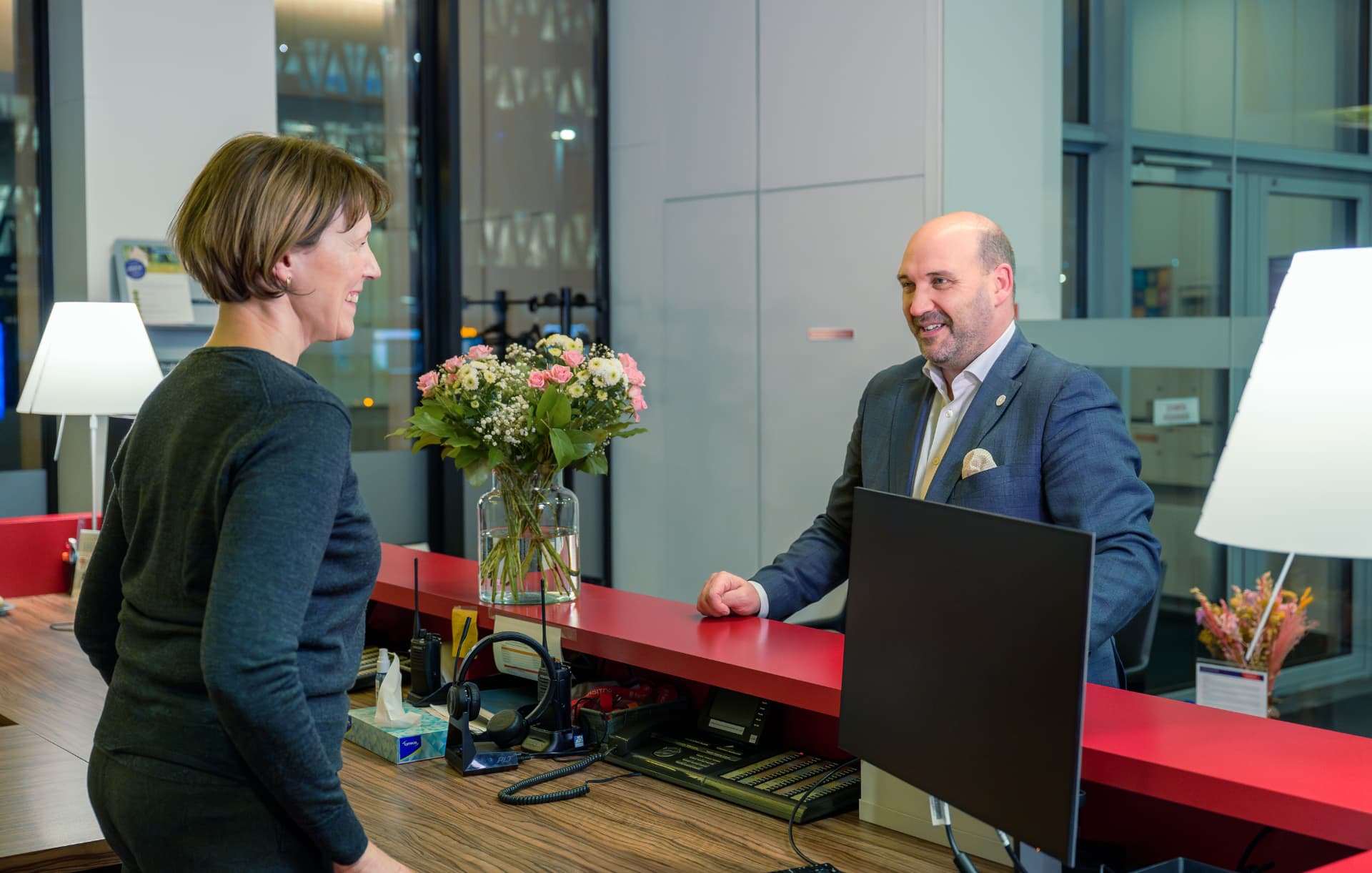
The first minute at the desk sets the tone for everything that follows. How to greet a person who is frightened, how to handle a queue without making the one in front feel rushed, and how to hand someone over to a colleague without them feeling passed on.
The room and the tray
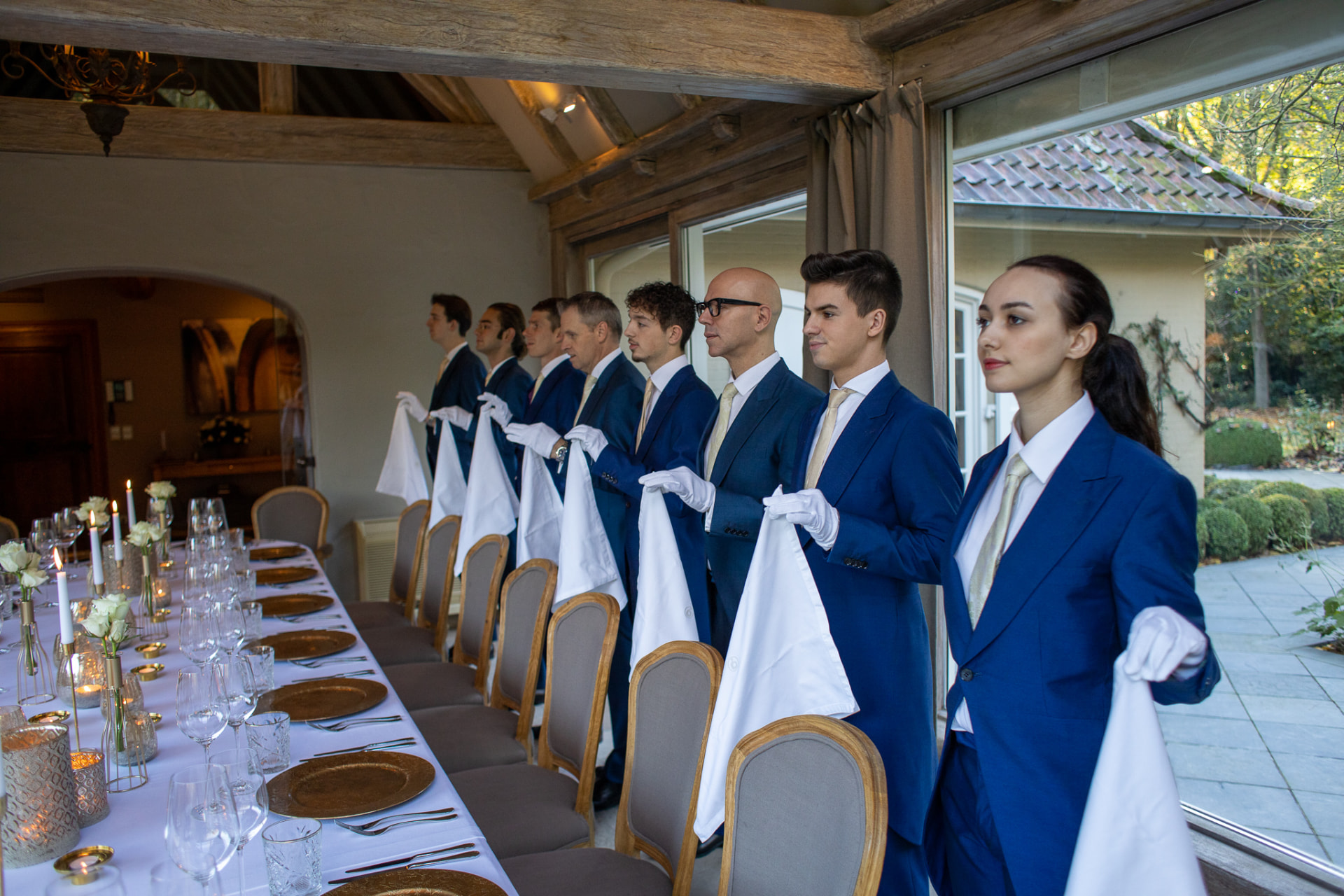
Presence in a room. Knocking, entering, the order in which things are done, how a tray is set down, how a bed is made with someone lying in it. Small mechanics that carry a great deal of dignity.
Language and privacy
The words that calm and the words that alarm. Speaking to a patient, not about them. What is said in a corridor, in front of a neighbour's bed, and in a phone call to a worried relative.
The difficult moment
The complaint, the long wait, the relative who is angry because they are afraid. How to take responsibility without defensiveness, and how to recover a situation so the family leaves better disposed than they arrived.
Why us
Butler standards, translated into care.
We translate butler standards into a care setting, where the guest is a patient and the stay is a treatment. Nothing medical changes; the way people are accompanied does.
We built a Healthcare Butler programme for a rehabilitation clinic in Switzerland, starting with a first group of six staff chosen to carry it back into their own departments. The clinic began promoting the programme inside its own teams as something to roll out.
Unique in Belgium
The only etiquette school in Belgium that brings international experience and the world's biggest brands into the room.
We are unique in Belgium because we do not teach etiquette from a book. We teach it from the places where it is used every day: private households, Michelin-starred restaurants, five-star hotels, diplomatic missions and international boardrooms, in Belgium and abroad.
That international experience comes into your room with us, together with the standards of the largest brands we work with, including Mercedes-Benz, Jaguar Land Rover, Eurostar, Coca-Cola European Partners, Belfius and Lidl, and houses such as The Westbury in Dublin and the Valamar resort group.
What clients say
"We will begin actively promoting the programme within our teams today."
Practical information
Group size
10 to 15 participants
Format
One day
Languages
French, English or Dutch
Location
Delivered at a location of your choice